Metal vs. Cedar Raised Beds
Both work well. The choice mostly comes down to how long you want the frame to last, how much you want to customize it, and the look you like. This page sums up general differences. It was not a hands-on test.
Metal beds
- Lifespan: coated steel (galvanized, or zinc-aluminum-magnesium) does not rot, so the frame usually outlasts wood.
- More soil, same footprint: thin walls leave more room inside than thick boards do.
- Shipping and setup: panels ship flat and bolt together. Cut edges can be sharp, so look for a rolled or capped top edge and wear gloves to assemble.
- Heat: walls in full sun get warm. In a full bed the effect on roots is small, and it can help soil warm up in spring.
- Heights: tall versions (17" to 29" and up) are easy to find, which saves bending.
Cedar beds
- Untreated and rot-resistant: cedar is chosen because it holds up without chemical treatment.
- Still wood: it slowly breaks down where it touches wet soil. Thicker boards last longer, and wet climates wear it faster.
- Easy to customize: cut it to fit an odd corner, or screw on a trellis, cover hoops, or a sitting ledge.
- Long sides can bow: on longer beds, add a cross brace or corner posts so soil pressure doesn’t push the boards out.
Things that don’t change with material
- Width: keep it reachable. A bed you can walk around is often about 4 feet wide; against a wall or fence, about 2 feet.
- Soil volume: length × width × height, all in feet, gives cubic feet. A 3.5′ × 2′ bed that is 17" (about 1.42 ft) tall holds about 9.9 cu ft, or roughly ten 1 cu ft bags.
- Fill: use a raised-bed mix, not yard soil alone. See soil and the bagged soil guide.
Quick pick
- Want it to last and ship in one box: metal.
- Want a custom size or a wood look: cedar.
A metal example
17" Tall 3.5' x 2' Metal Raised Garden Bed
$109.95
Sale price. Regular $149.95
VEGEGA knee-high steel bed, 3.5 by 2 feet. Slate grey and oyster white are in stock.
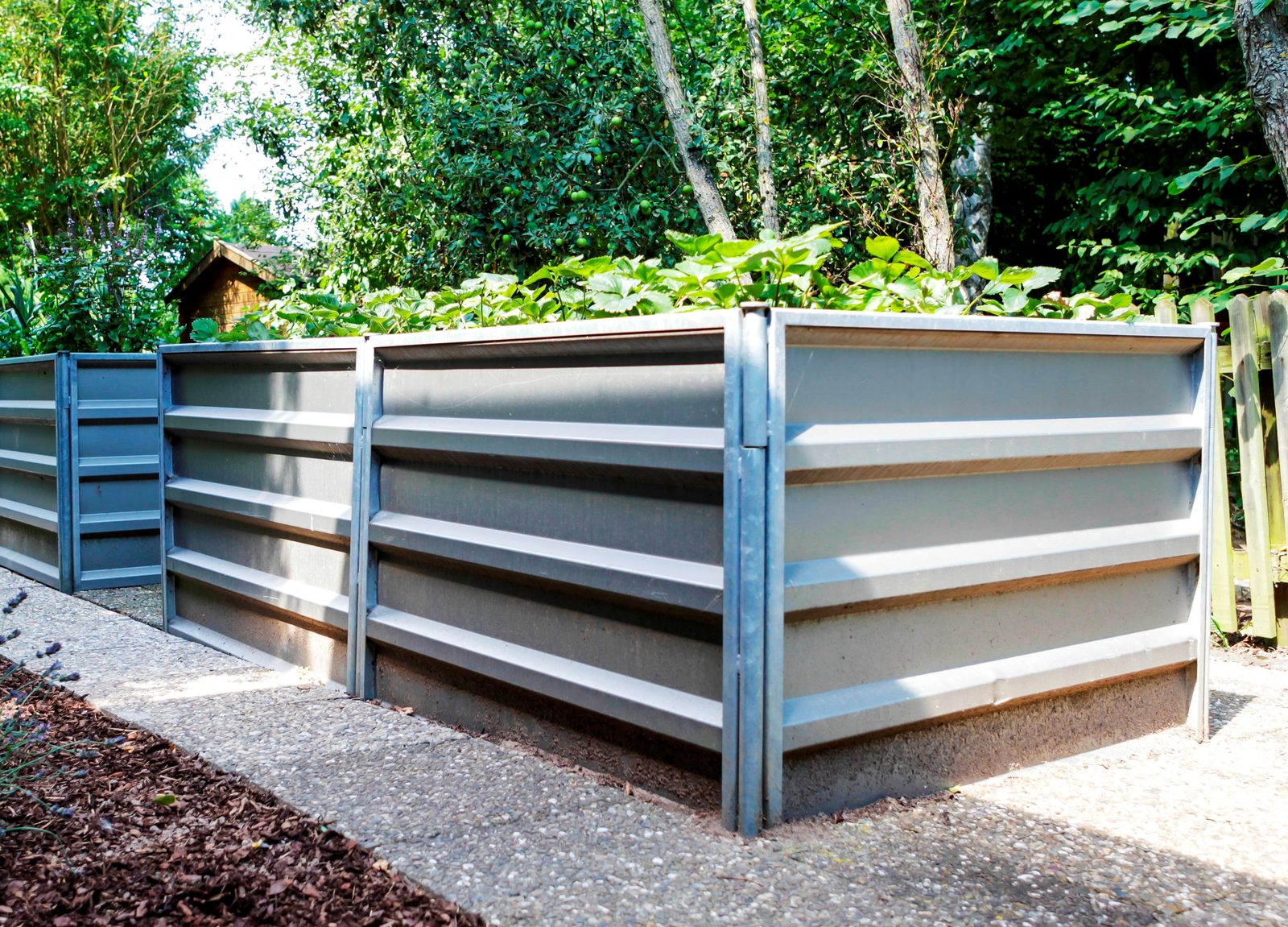
More beds, metal in 15", 17", and 29" heights: all beds.